

The banking industry is entering a new era of customer engagement. Traditional loyalty programs built around points, rewards catalogues, and transactional incentives are no longer enough to create meaningful differentiation.
Today’s banking customers expect relevance, immediacy, and seamless experiences across every interaction, while institutions simultaneously face growing pressure from digital-first competitors, embedded finance providers, and rapidly shifting consumer expectations. This environment is driving the rise of Next Generation Loyalty, a strategic paradigm that moves beyond isolated rewards programs, transforming loyalty into an intelligent, data-driven customer engagement capability embedded across the entire banking relationship.
For banks across the Asia-Pacific region and globally, this evolution represents both a critical operational challenge and a profound commercial opportunity.
Traditional banking loyalty models were historically product-centric. Customers accumulated points based on credit card spend, redeemed rewards periodically, and engaged with the bank primarily through siloed product interactions. While these programs generated baseline engagement, they frequently lacked emotional resonance and failed to build true long-term advocacy.
Next Generation Loyalty changes this framework entirely. Forward-thinking institutions are shifting their focus from merely rewarding transactions to asking a more fundamental question: How do we become an intuitive, indispensable partner in the daily financial lives of our customers?
This represents a permanent shift from transactional tracking to holistic relationship loyalty.
The modern banking customer demands hyper-personalised, context-aware experiences (i.e. real-time dynamic pricing, proactive financial guidance tailored to their current life stage) delivered seamlessly across every channel. The banks that succeed in this environment will be those capable of translating vast data ecosystems into highly connected, real-time experiences at scale.
Building an intelligent loyalty ecosystem is inherently more complex than deploying a legacy rewards platform. Most tier-one banks operate within highly fragmented technology landscapes where customer data is distributed across core banking platforms, disparate CRM systems, digital channels, and legacy data warehouses.
Without a unified view of customer intelligence, institutions struggle to deliver consistent personalisation, identify churn risks, or execute real-time next-best-actions. Consequently, modern loyalty transformation is no longer just a marketing initiative; it’s a core enterprise strategy requiring deep integration across infrastructure, analytics, and operations.
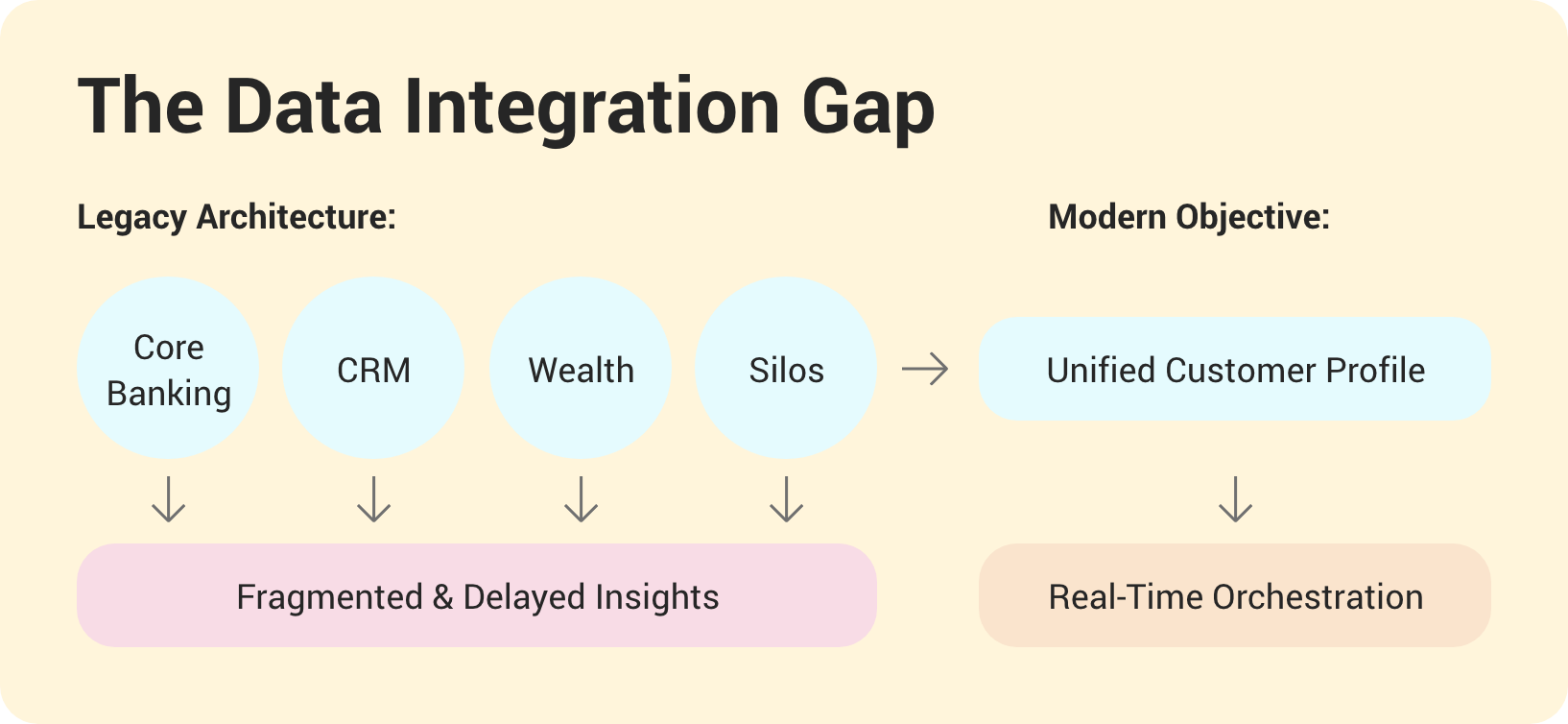
To resolve this, leading organisations are investing heavily in enterprise integration frameworks, advanced Customer Data Platforms (CDPs), and real-time analytics engine layers. By aggregating behavioural signals (e.g. transaction history, digital footprints, life-stage indicators) into a single, actionable profile, banks can finally transition to sophisticated journey orchestration.
Contextual Engagement: A customer browsing mortgage calculators online can be met with immediate, personalised home financing guidance rather than generic product ads.
Proactive Retention: Predictive models can flag a high-value customer showing subtle signs of reduced engagement, automatically triggering bespoke retention journeys before churn occurs.
One of the defining characteristics of Next Generation Loyalty is hyper-personalisation at scale. Today’s banking customers do not evaluate their financial institution against competing banks. They benchmark them against the fluid, anticipatory experiences delivered by premier e-commerce, streaming, and big-tech platforms.
Moving beyond basic segment-based campaigns requires an architectural shift toward real-time decisioning and event-triggered communication across all touchpoints—from mobile applications and relationship managers to customer service contact centres.
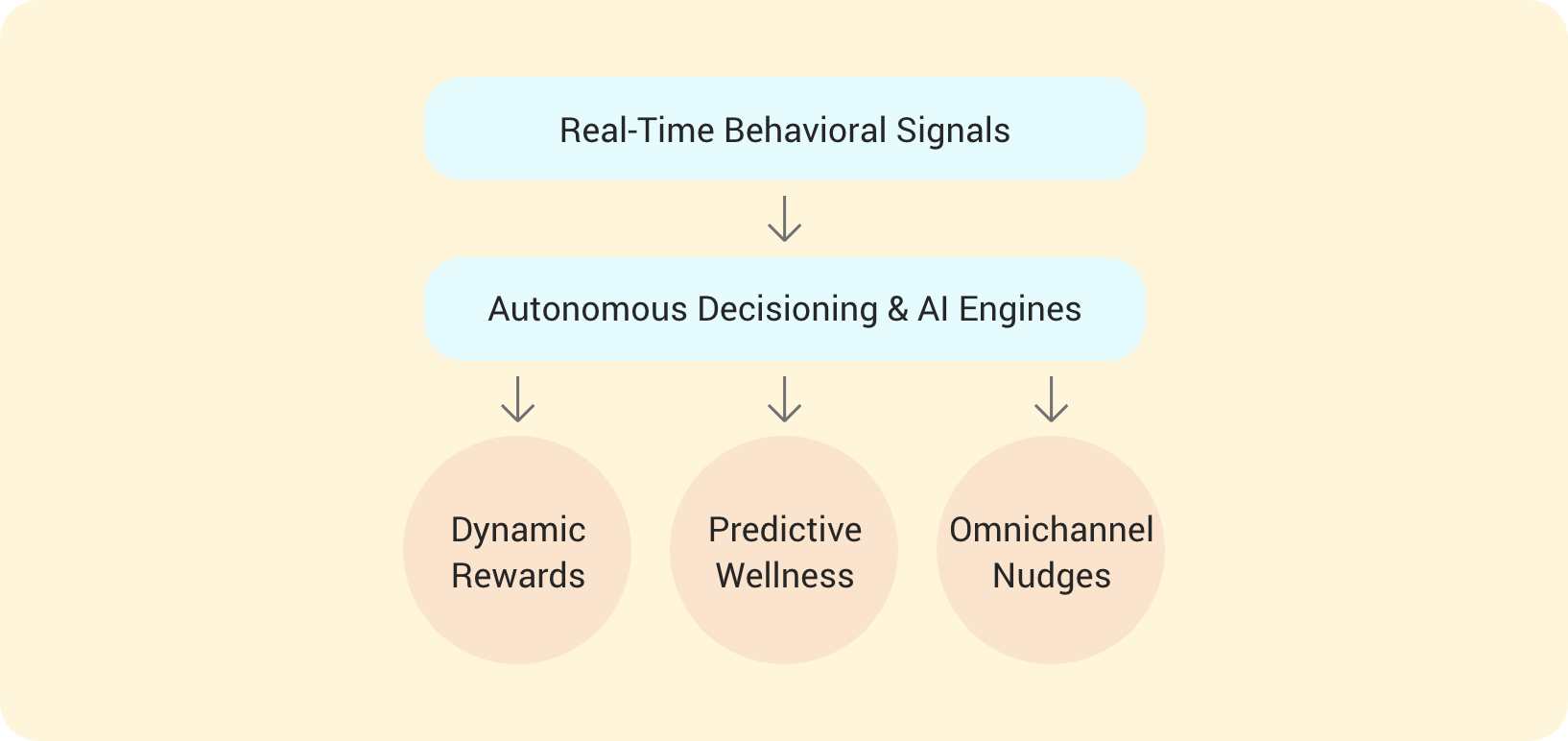
The deployment of sophisticated artificial intelligence acts as the primary accelerator for this transformation. The emergence of autonomous intelligence engines—systems capable of analysing intent, predicting needs, and orchestrating interactions independently—is redefining the boundaries of engagement.
Rather than requiring customers to actively manage their loyalty status, advanced AI utilities can work silently in the background, continuously optimising value, recommending tier-progression pathways, and offering bespoke financial wellness nudges on the customer’s behalf.
While rational incentives like cashback or points accumulation remain foundational, leading banks recognise that sustainable market share is driven by emotional loyalty. This shift demands that institutions reward holistic behaviours rather than spend alone:
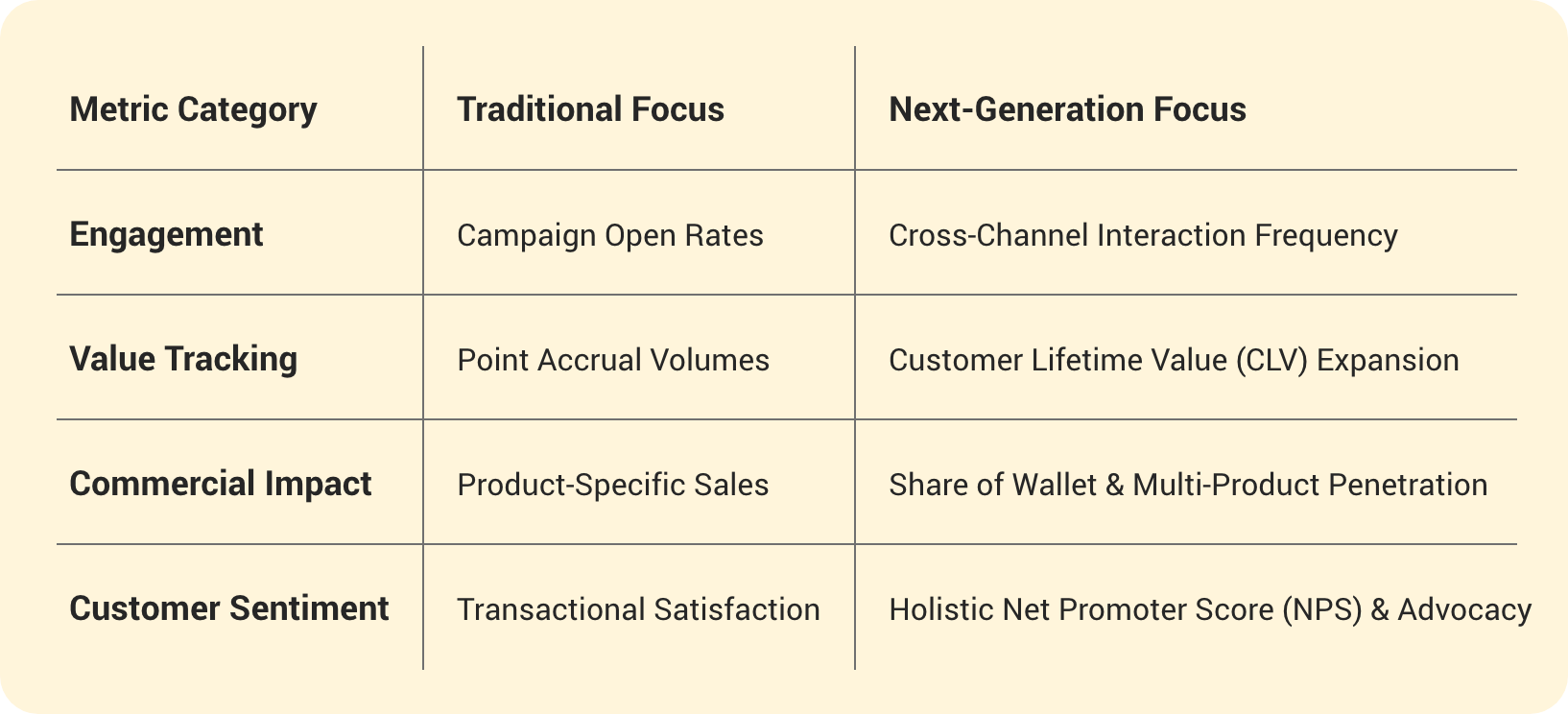
Naturally, this shift in strategy requires a corresponding evolution in how leadership measures success. Traditional metrics are being superseded by a more comprehensive matrix of executive-level KPIs:
Next Generation Loyalty represents a fundamental reimagining of how banks build and sustain customer relationships. It is no longer a bolt-on rewards initiative layered atop standard banking products. It is an intelligent framework powered by data cohesion, predictive intelligence, and sophisticated experience design.
As the financial services landscape across Asia-Pacific continues to digitise rapidly, the ultimate differentiator will not be the richness of a points catalogue; it will be the intelligence of the relationship.